

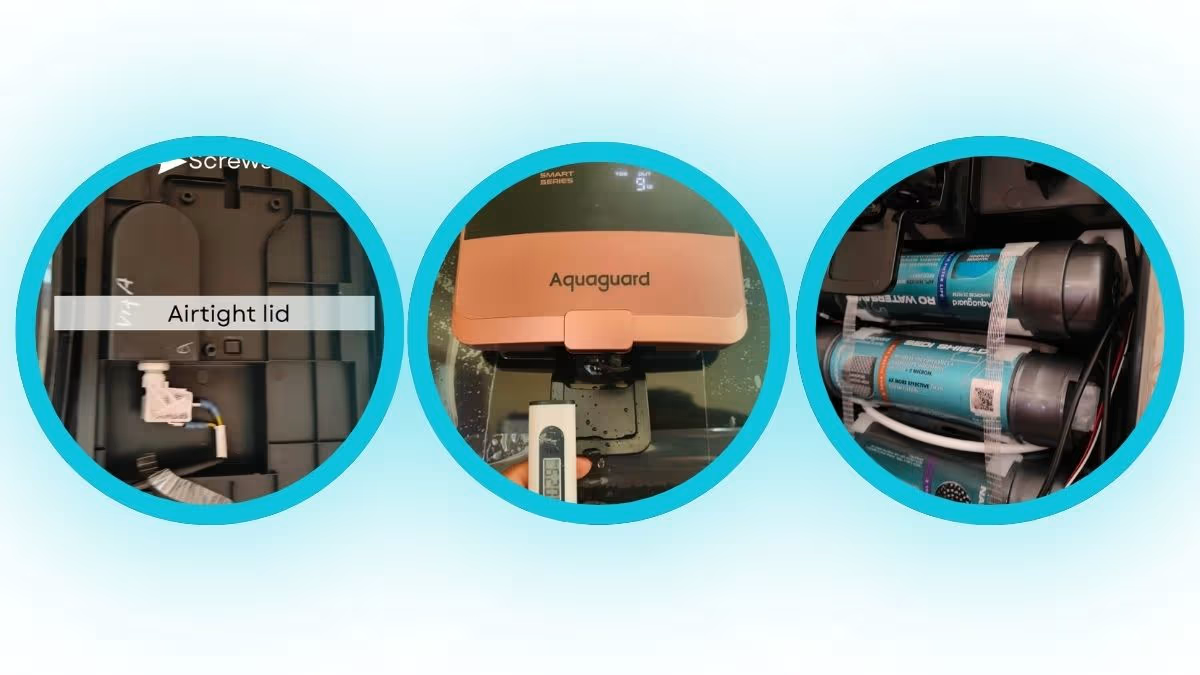
The Aquaguard Enrich Ritz Pro is counted among the most complete smart RO purifiers which you are able to buy in the range of around ₹20,000. During our testing inside the home, it is bringing down the 158 ppm tap water till nearly 30 ppm only, and the 5 L stainless steel tank is also getting refilled by it in less than 15 minutes, plus the pairing with Eureka Forbes app happened on the very first attempt itself. Because of the 4-year unconditional warranty and the ₹5,800 filter cost for four years, the long-term ownership is becoming very much predictable for the buyer. The only drawbacks which are actually real are this – there is no manual TDS controller given, and the steel tank is of concealed type, so cleaning by yourself is not possible.
Aquaguard Enrich Ritz Pro 4X at a Glance
| Specification | Details |
| Purification | 12-stage RO + 5th Gen UV LED + Active Copper + Alkaline Boost |
| Storage | 5 L surgical-grade SS 304 stainless steel tank (lifetime warranty, which is defined as 10 years) |
| Dimensions | 480 mm (H) × 320 mm (W) × 296 mm (D) |
| Body Material | ABS (Acrylonitrile Butadiene Styrene) |
| Smart Features | Wi-Fi + Bluetooth, Eureka Forbes app, 21-point health check, TDS IN/OUT display |
| Warranty | 4-year unconditional warranty (filters are also covered) |
| Filter Cost (4 years) | ₹5,800 |
| In the Box Bonus | External pre-filter (worth ₹1,500) |
Who Should Buy This Water Purifier?
After spending a week together with this unit, here is my thinking about who will be taking the maximum value out of it:
- The homes which are depending on borewell, tanker or municipal water, where the TDS is lying roughly between 150 and 2,000 ppm.
- The families who are wanting a stainless steel storage tank and not the plastic one, if the source water temperature exceeds above 45 ℃.
- The buyers who are preferring a “set it and forget it“ type purifier, where the running cost is staying predictable for the full four years.
- The tech-friendly users who are liking to keep the track of water consumption, filter life and also the water quality through one app.
If your source water is already very much low in the TDS (below ~100 ppm) and it is also free from the heavy metals, then an RO purifier can be more than your actual requirement – in that situation one UV+UF model is also becoming enough.
Design and Build Quality
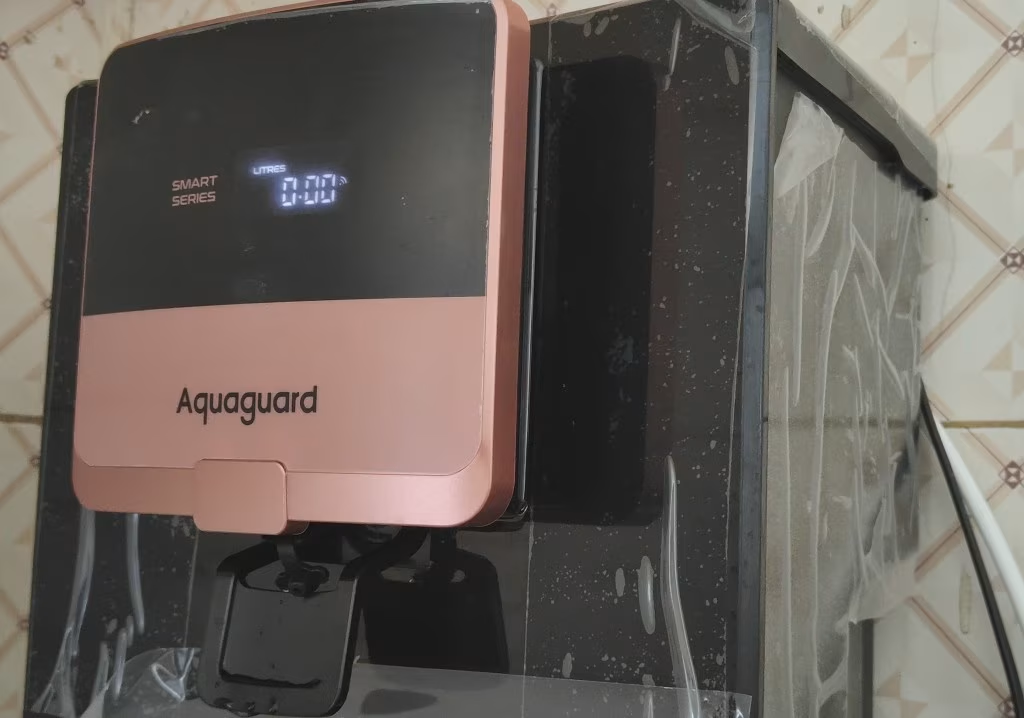
The Enrich Ritz Pro comes with a premium wall-mount design, which having a rose-gold front panel, one glossy black body and also a “Smart Series” digital display on the top portion. With the size of 48 × 32 × 29.6 cm, it is compact enough for the most of kitchens, but still you have to plan some space for the external pre-filter which is coming inside the box.
The body material is ABS plastic, that is a standard thing in this segment only. The fit and finish is feeling quite solid to me, there is no rattling panels or any loose parts. The dispenser area also is wide enough so that a normal jug or bottle can fit easily.
Inside the purifier
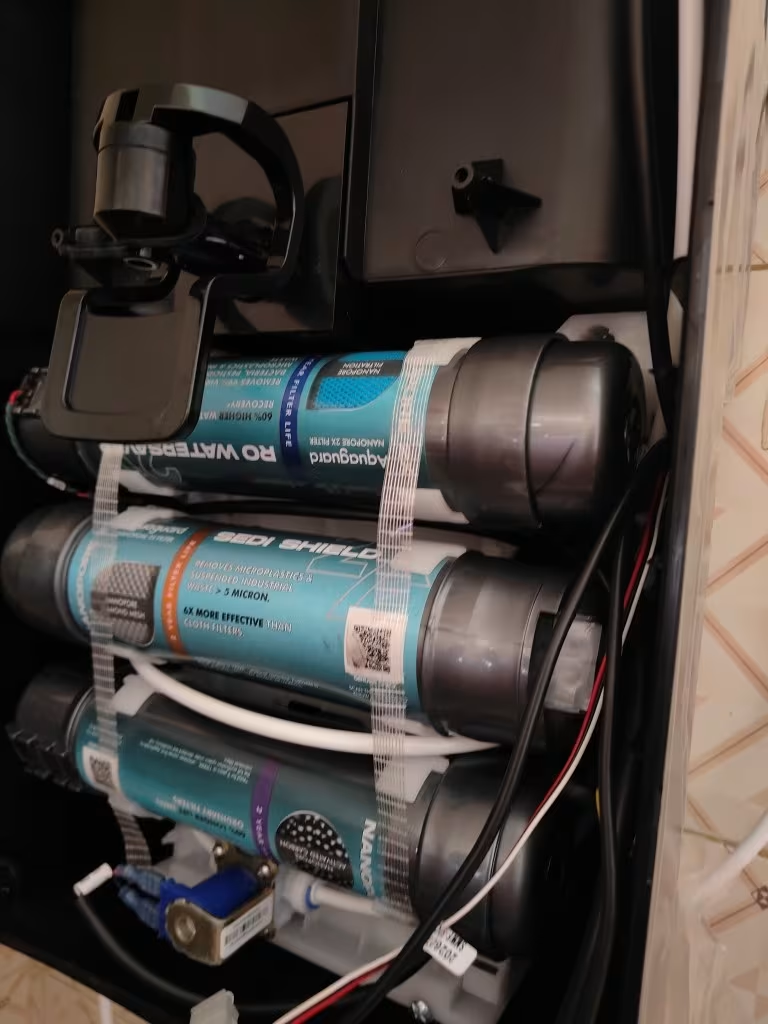
When you are opening the cover, you can able to see the filter cartridges which are stacked very neatly, including the RO membrane, the Sedi Shield filter (it is labelled for removing the microplastics and suspended industrial waste which is above 5 microns) and also the Nanopore long-life filters. The wiring and the tubing both are routed and secured in a tidy manner, which is telling us a good thing about the factory quality.
Stainless Steel Tank: Airtight and Concealed
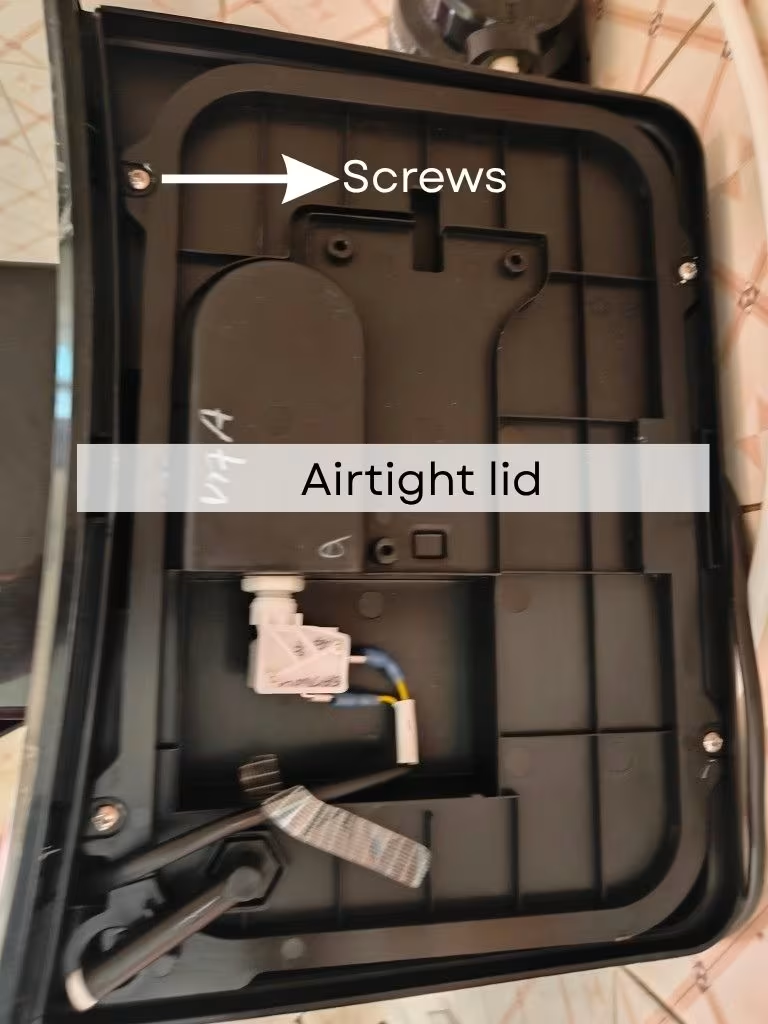
This one is among the biggest selling point of this purifier. In the place of a plastic tank, here you are getting a 5-litre SS 304 stainless steel tank, which is resisting the corrosion and also not holding the odour like how some plastic tanks are doing after some time period. This tank is coming with a lifetime warranty (Aquaguard is defining this as 10 years only). Also, see Stainless Steel Vs ABS Plastic Water Purifier.
The lid is airtight and it is fixed with the screws, same as you can see in my photo. This is a good point for the hygiene side, because the dust, insects and airborne contaminants are not able to go inside.
But there is one trade-off also: the tank you cannot clean by your own self. For cleaning the steel tank, you have to ask the Aquaguard technician so that he can unscrew it in the time of a service visit. For the most of users this is totally fine, but if you are the type of person who likes to clean the tanks by yourself, then please keep this point in your mind.
12-Stage Purification Explained
Being someone who is working with the reverse osmosis systems since many years, I am really appreciating that Aquaguard is not just stacking the filters only for the marketing purpose – every single stage is having one clear job to do.
| Stage | Filtration | What It Does |
|---|---|---|
| 1 | Mega Sediment Filter | It removes the fine dust, dirt and mud particles, and by doing this it is gives protection to the other filters which comes after it. |
| 2 | Sedi Shield 2X | This one is removing the suspended particles which are very small, up to around ~5 microns size only. |
| 3 | Particulate Filter | It catches the suspended matters, because sometimes these matters are carrying the microorganisms also. |
| 4 | Anti-Scale Filter | It is reducing the scale building-up, which otherwise is doing choking of the membrane. |
| 5 | Chemi Block 2X | This stage is reducing the chemicals, and also the bad smell and bad taste is getting reduced. |
| 6 | RO Maxx 2X | It is reducing the dissolved salts, the heavy metals also like lead, mercury, arsenic and cadmium, and along with that the microplastics and pesticides are also removed. |
| 7 | 5th Gen UV LED | This is a mercury-free type UV, and it is inactivating the microorganisms in instant way. It is also having good life, rated up to 10 years. |
| 8 | Active Copper | It is adding the copper into the water. |
| 9 | Zinc Enrichment | It is adding the zinc. |
| 10 | Calcium Enrichment | It is adding the calcium. |
| 11 | Magnesium Enrichment | It is adding the magnesium. |
| 12 | Alkaline Boost | It is raising the pH level, so that water is becoming alkaline as per the BIS standard which is given. |
How it is working:
- Stage 1 to 4 (Physical filtration): Here the dirt, the sediment and also the scale, all are getting removed first, before the water is reaching till the membrane.
- Stage 5 to 6 (Chemical + RO): In this part, the chemicals, the taste problem and the dissolved impurities are becoming much less.
- Stage 7 (UV LED): The micro-organisms are made inactive here, and the good thing is there is no any warm-up waiting time.
- Stage 8 to 12 (Enrichment): Now the copper, zinc, calcium and magnesium are putting back again inside, and the pH is also lifted up.
The anti-scale filter and the auto-flush technology, these two are the main reason why the 4-year filter life claim is looking believable to me. We must understand that scaling is the number one reason by which RO membranes are failing too early in homes.
So this is one meaningful engineering decision, not only a simple feature point for the brochure.
TDS Performance
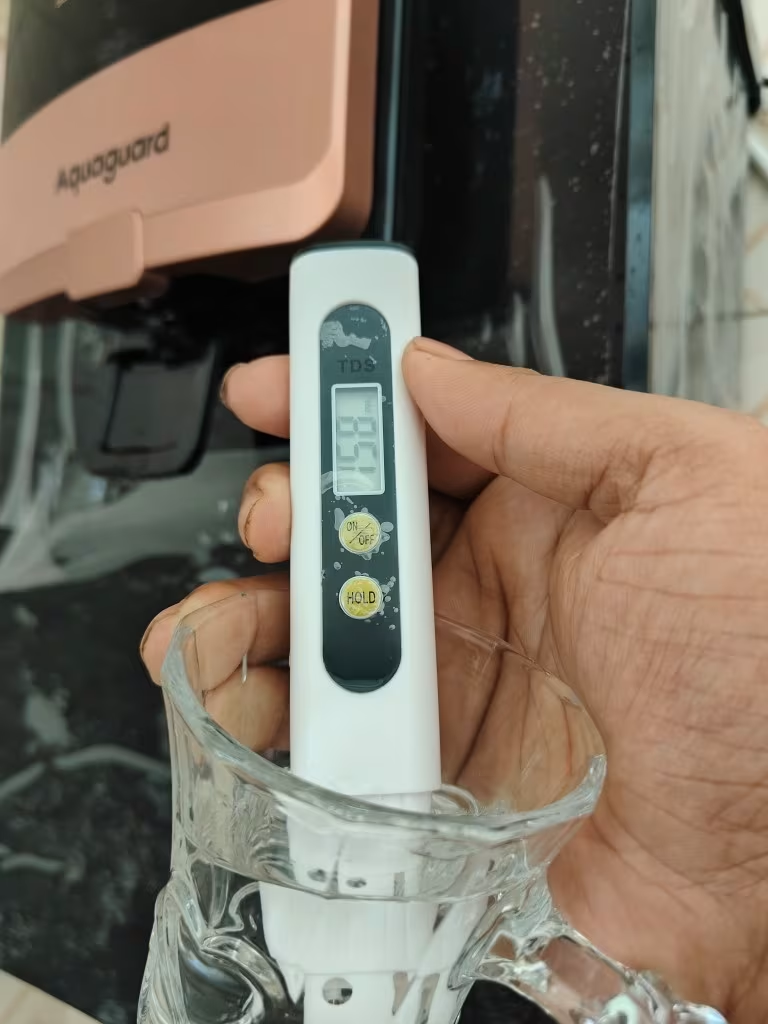
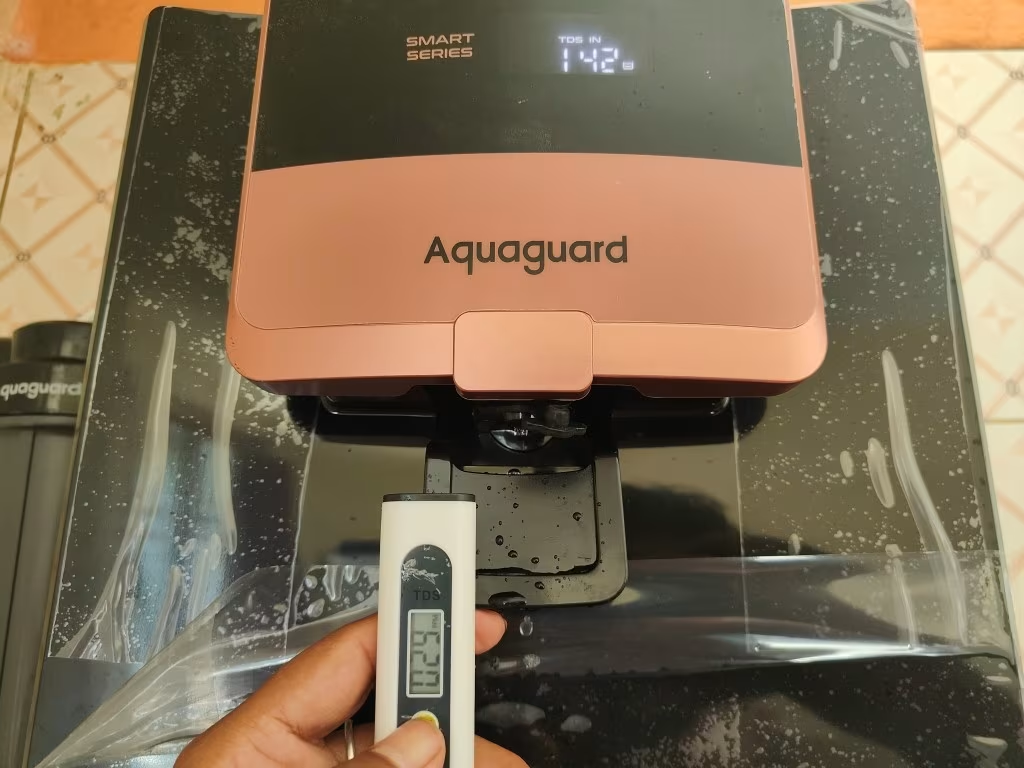
I recorded the testing of the purifier by using a TDS meter, and after that I compared these reading with the purifier’s own built-in display also.
| Measurement | My TDS Meter | Purifier’s Built-in Display |
| Input water TDS | 158–170 ppm | 142 ppm |
| Output water TDS | 30–35 ppm | 9–12 ppm |
Why the two readings are not matching
This difference is appearing little bit worrying, but it is making full sense once we understand where exactly the sensors are sitting:
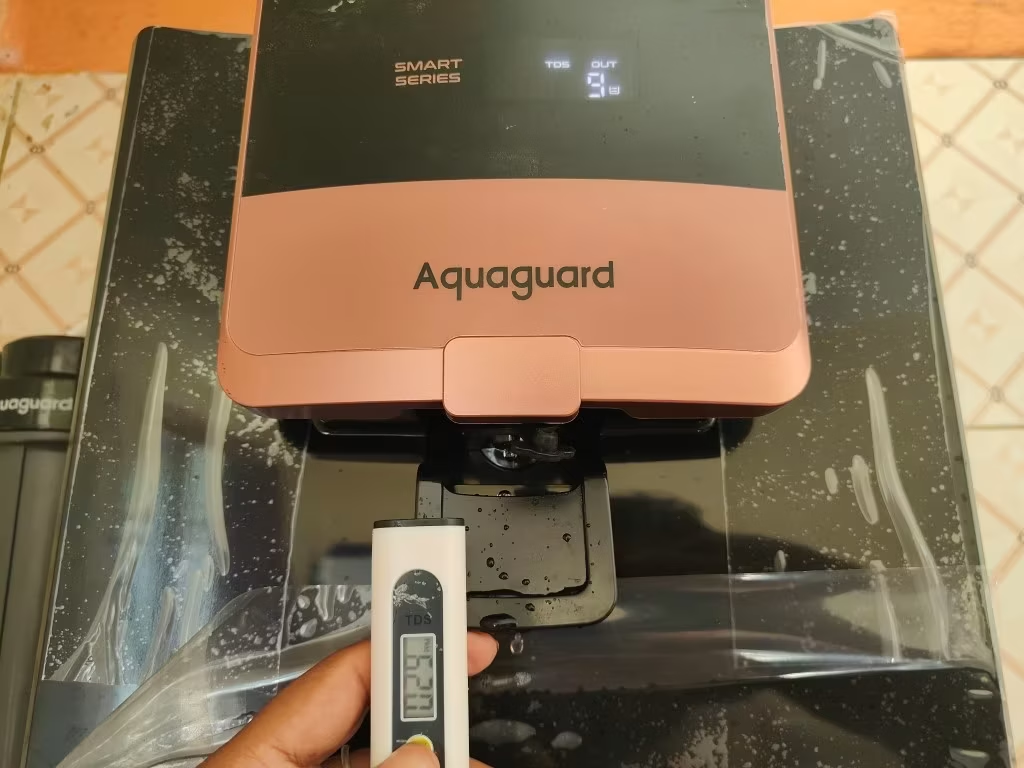
- Output TDS (9 to 12 vs 30 to 35 ppm): The built-in sensor is reading the water just immediately after the RO membrane, that means before the remineralisation is happening. But my meter is reading the water at the tap only, that is after the copper, zinc, calcium and magnesium are already mixed inside. So this 20+ ppm gap is nothing but the mineral enrichment stage which is doing its own duty.
- Input TDS (142 vs 158 to 170 ppm): This 10 to 15% variation in between a built-in sensor and a handheld meter, this is totally normal thing, because both are using the different calibration and also different temperature compensation method.
What these numbers are telling us
- As per the purifier’s own sensor, the RO membrane is rejecting more than 90% of the dissolved solids – and this is one excellent result for a domestic type membrane.
- The final drinking water came around 30 ppm at the tap, which is sitting very comfortably inside the BIS IS 10500 acceptable limit of 500 mg/L.
No TDS controller – is it mattering?
The Enrich Ritz Pro is not having any manual TDS controller. It is working on full automatic mode only and doing adjustment according to the input water itself. As per what the Aquaguard technician told me, the output TDS will be going up to near about 40 – 45 ppm after almost 10 days of usage, once the system is getting settled, this is for my input water of 158 ppm.
From RO engineering side, I am personally okay with this only. Many times the manual TDS controller is getting set too much high by the users, and because of this the untreated water is again mixing back inside. So one automatic system with dedicated mineral cartridge is the more safer way in my opinion. But yes, one thing – if you are wanting to adjust the taste by your own hand, that option you will not get.
I will be updating this review again with the actual output TDS reading once the 10-day period is completing.
Related – TDS Controller Vs Mineralizer in Water Purifier
Taste and Water Quality
The water at around ~30 ppm, with the minerals added, was tasting very clean and neutral type, and it was not having that flat and “empty” kind of taste which the very low-TDS RO water is giving sometimes. Also there was no plastic or metallic type aftertaste at all, which I am giving the credit to the stainless steel tank.
Purification Speed and Tank Refill Time
I recorded the timing of the refill myself – the purifier refilled the complete 5-litre tank within under 15 minutes only, which matched claimed purification rate of minimum 20 litres per hour.
Smart Features and Eureka Forbes App Setup
This one is a real genuine smart purifier, not only a purifier which is having one display and nothing else. Let me tell you exactly in which way my setup was going:
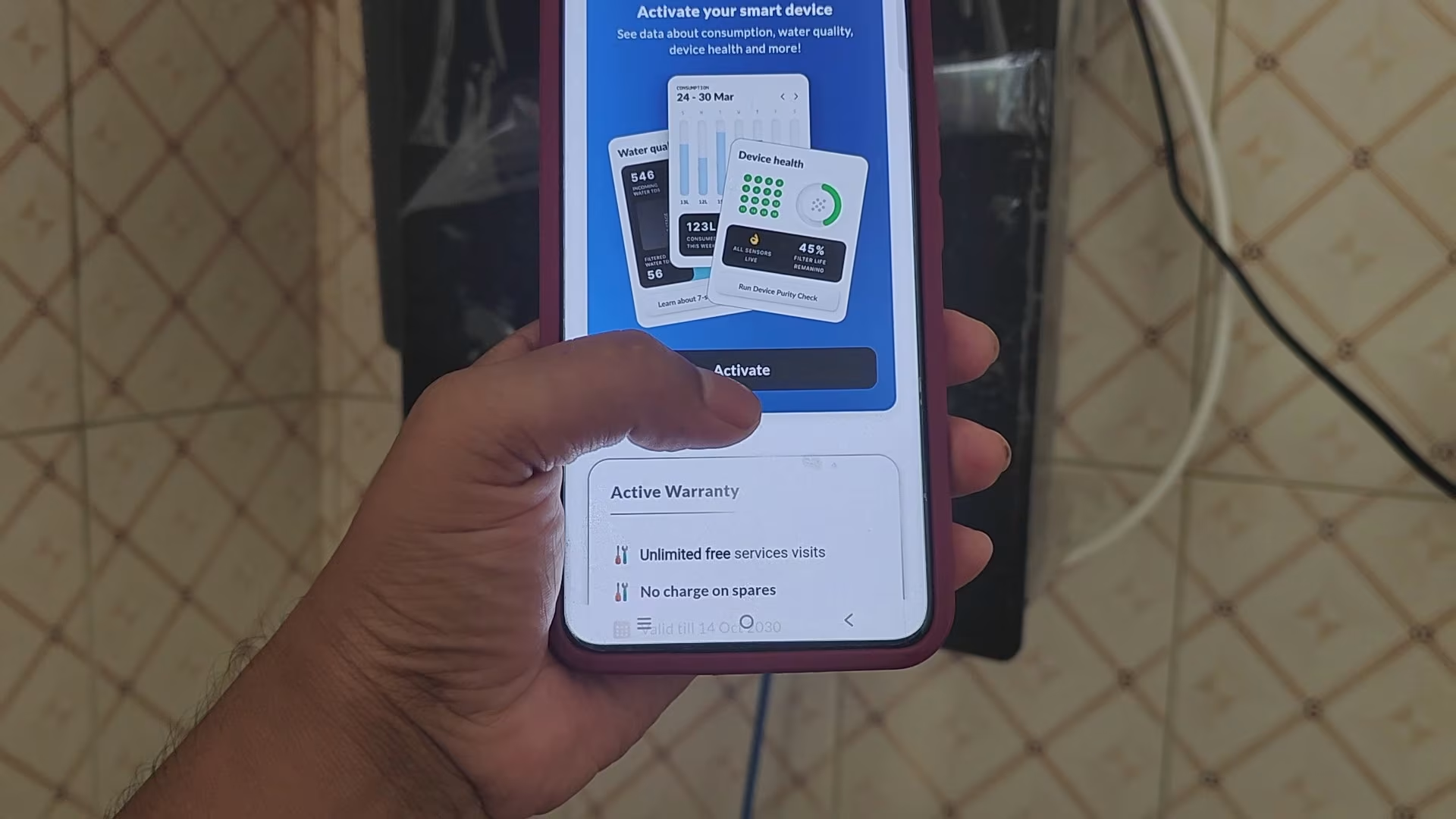
I opened the Eureka Forbes app and did tap on “Activate”.
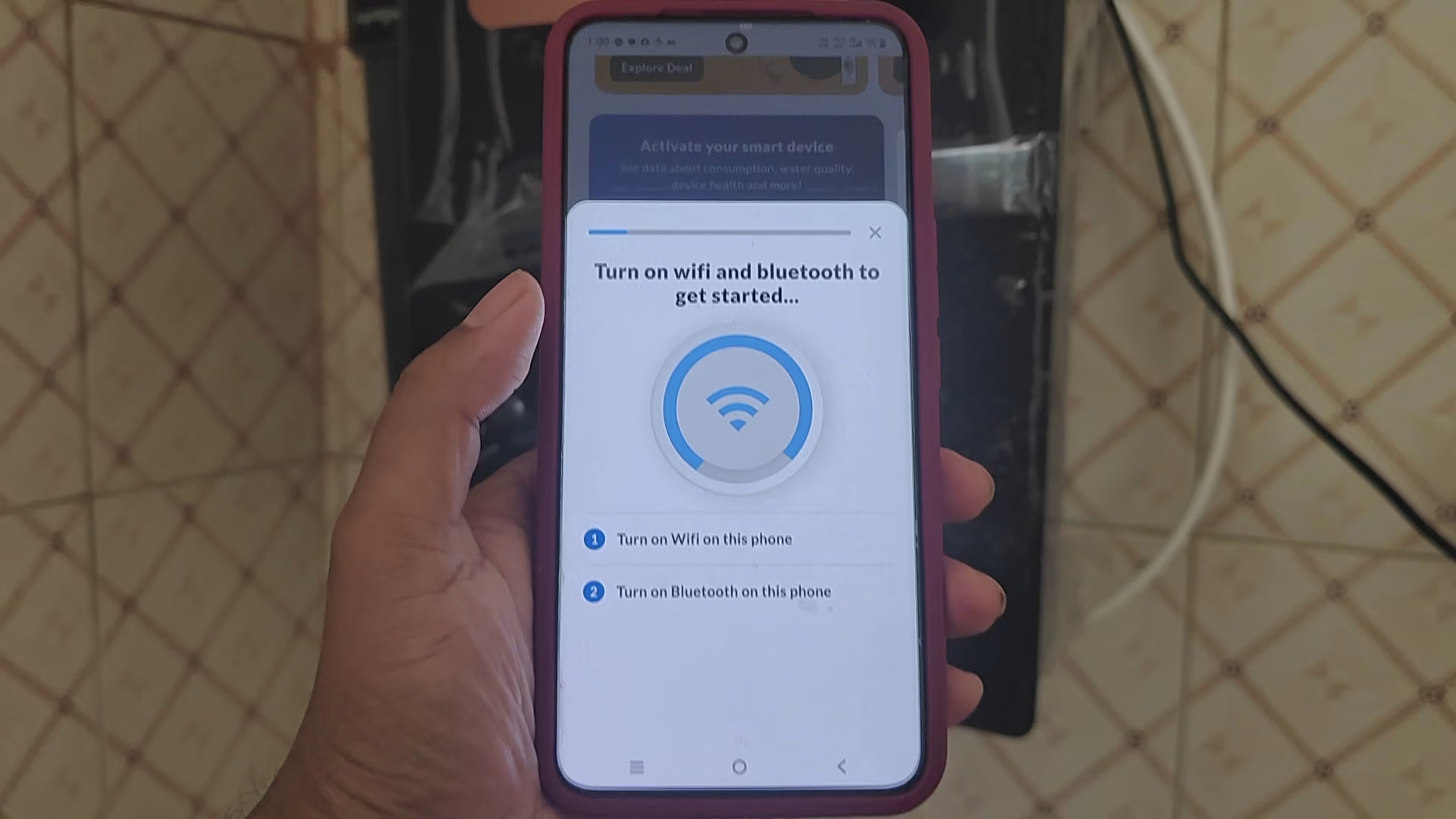
The app was asking me to on the Wi-Fi and Bluetooth (in my case both were already on).
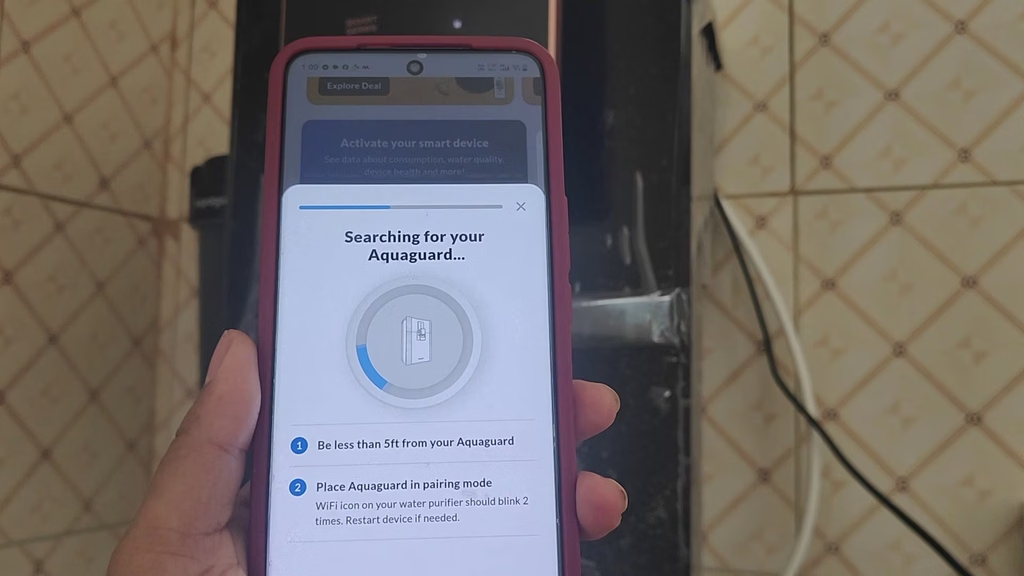
Then it started doing the searching for the model. I was keeping my phone around 60 cm distance from the purifier side.
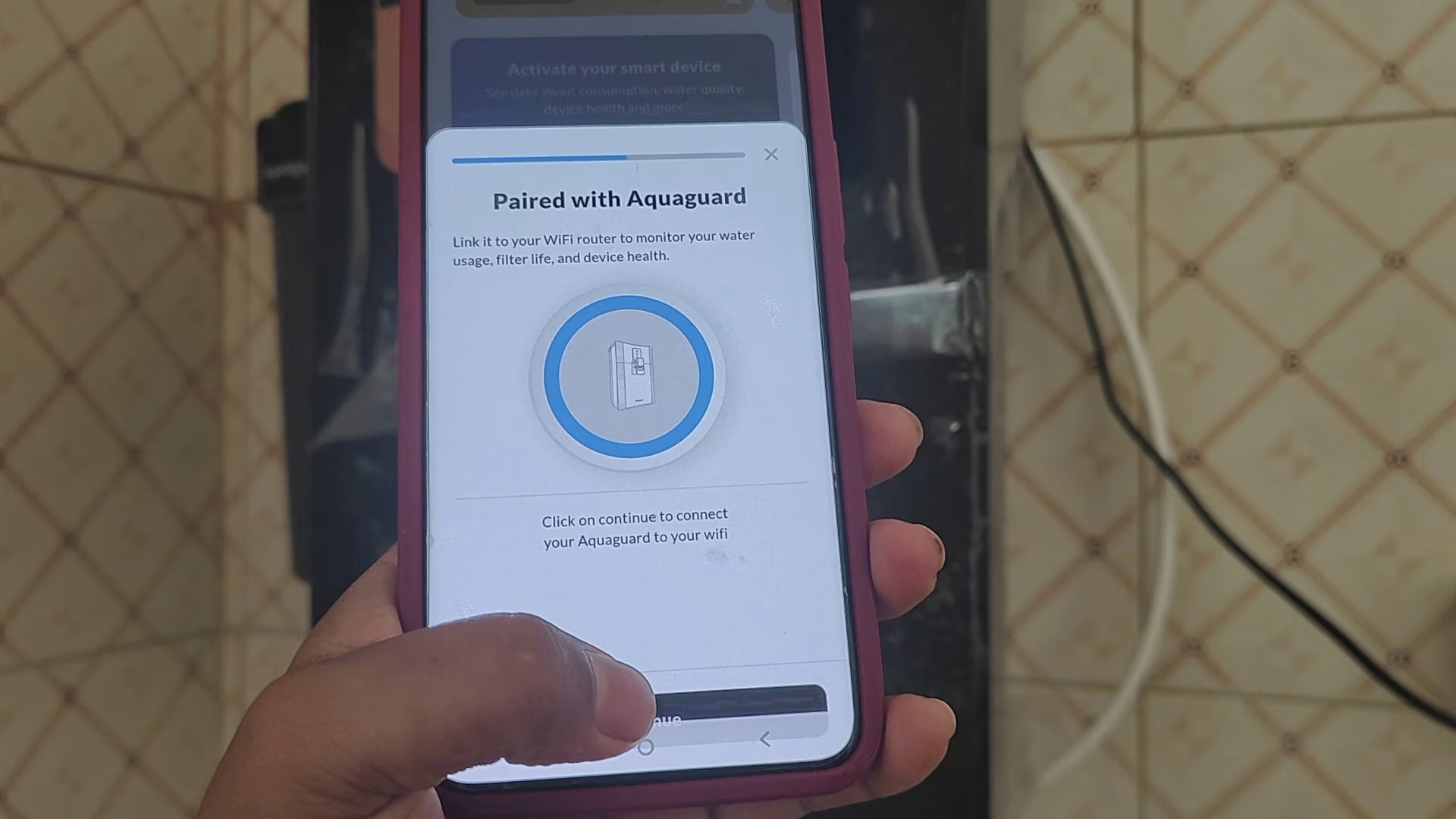
The app gave confirmation that the model is successfully paired with my phone – and from this point onwards, the purifier I could control from phone only.
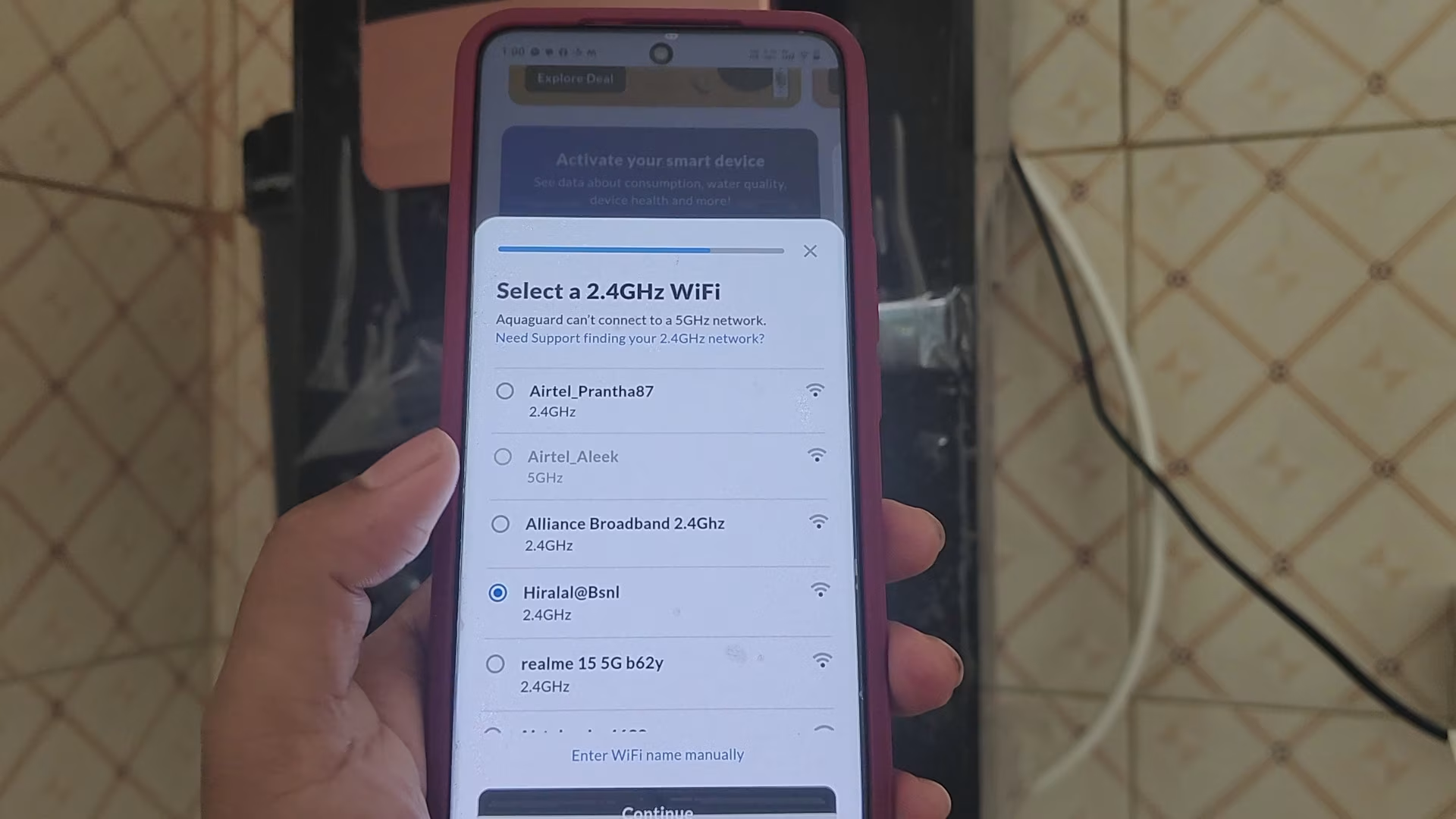
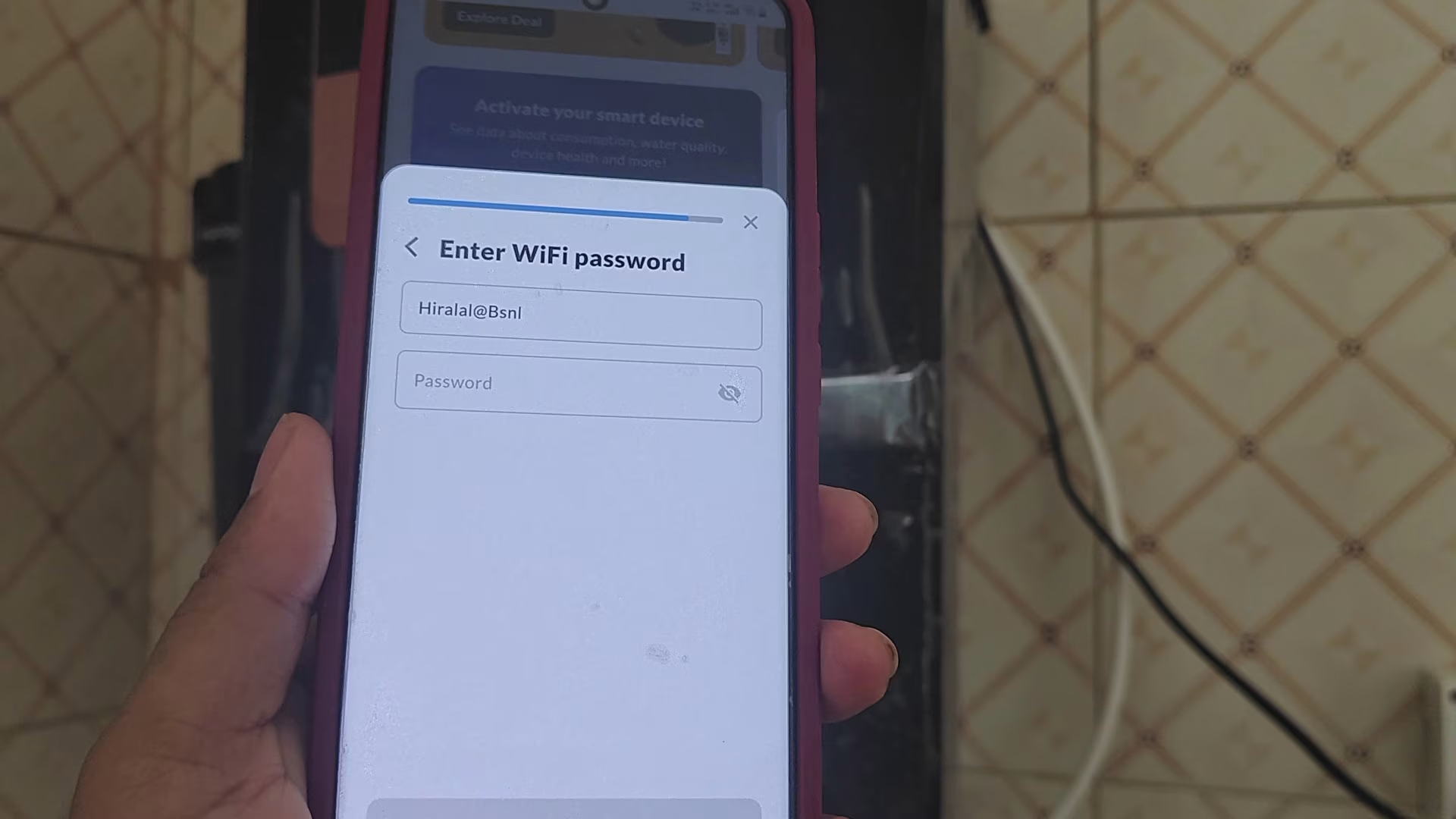
After that, I did the connection of the purifier with my home 4 GHz Wi-Fi, by selecting the network and putting the password.
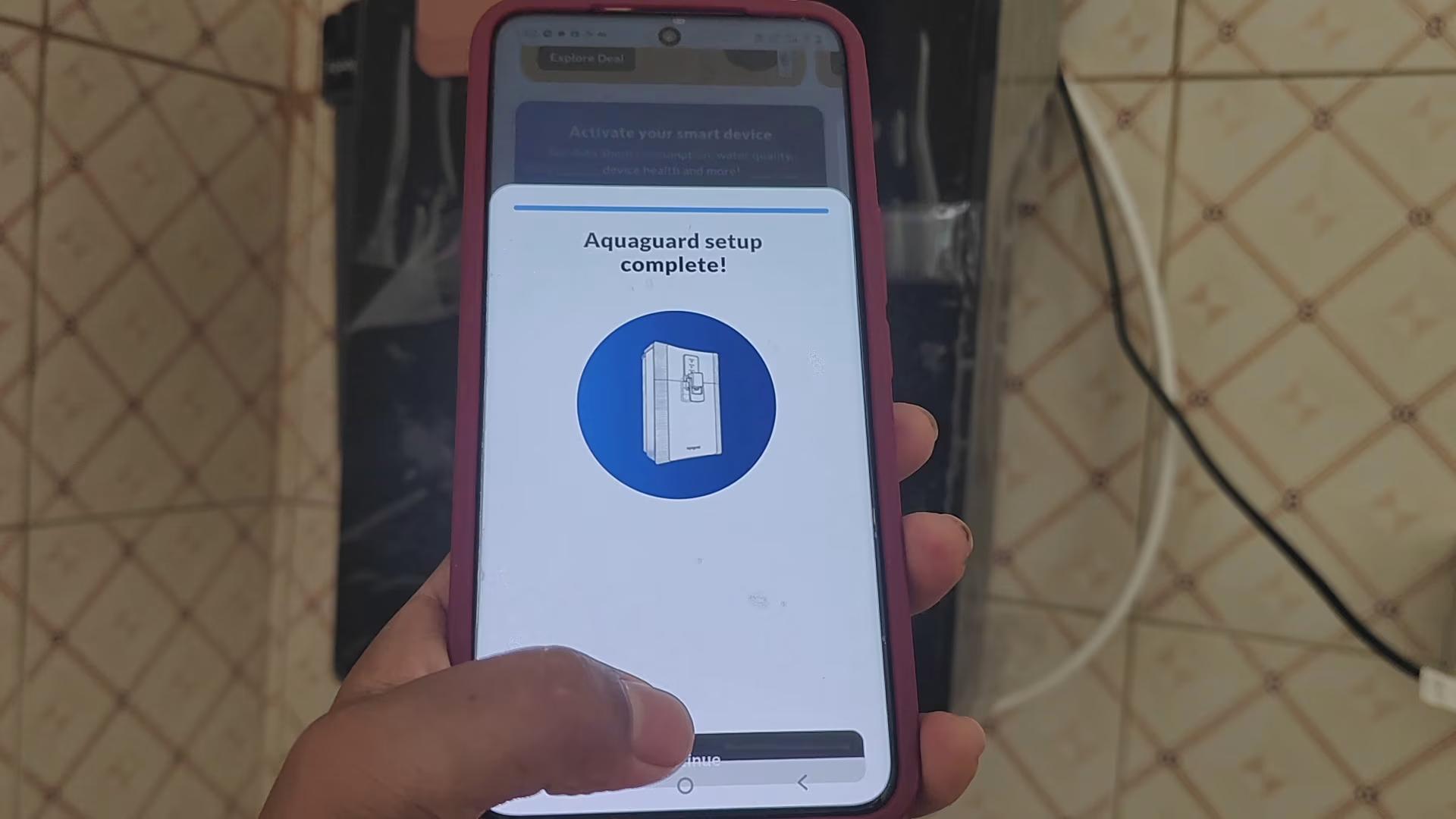
Then the app showed one message “Aquaguard setup complete!”
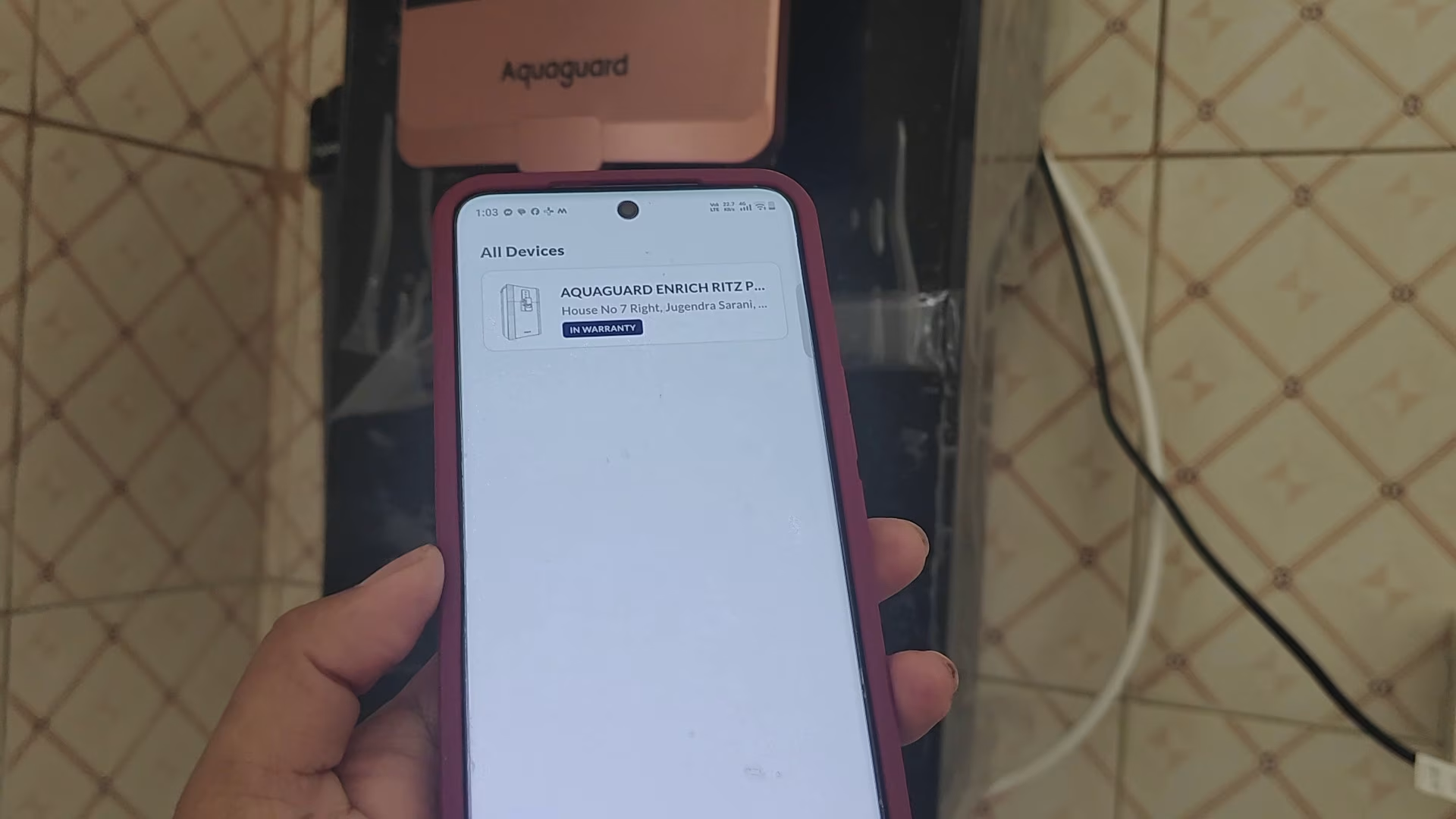
This full process was taking only few minutes of time. One tip from my side: this purifier is supporting 2.4 GHz Wi-Fi only, so if your router is broadcasting one combined 2.4/5 GHz network together, then you may have to do the separation of the bands.
What you can do in the app
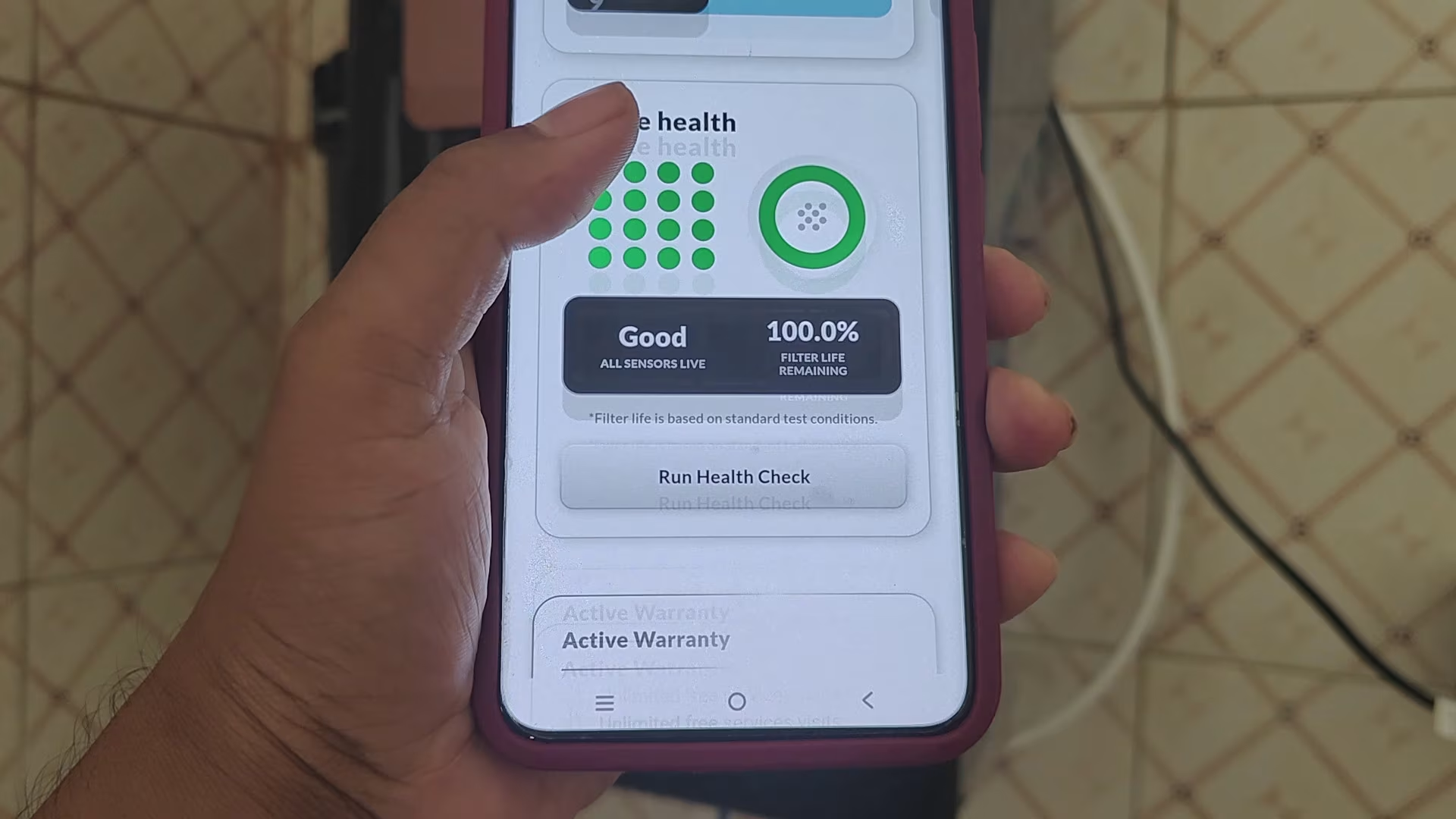
21-point Smart Health Check: It is scanning the filters, RO pump, UV lamp, flow sensor and many more things in the real time, so you always knowing the condition.
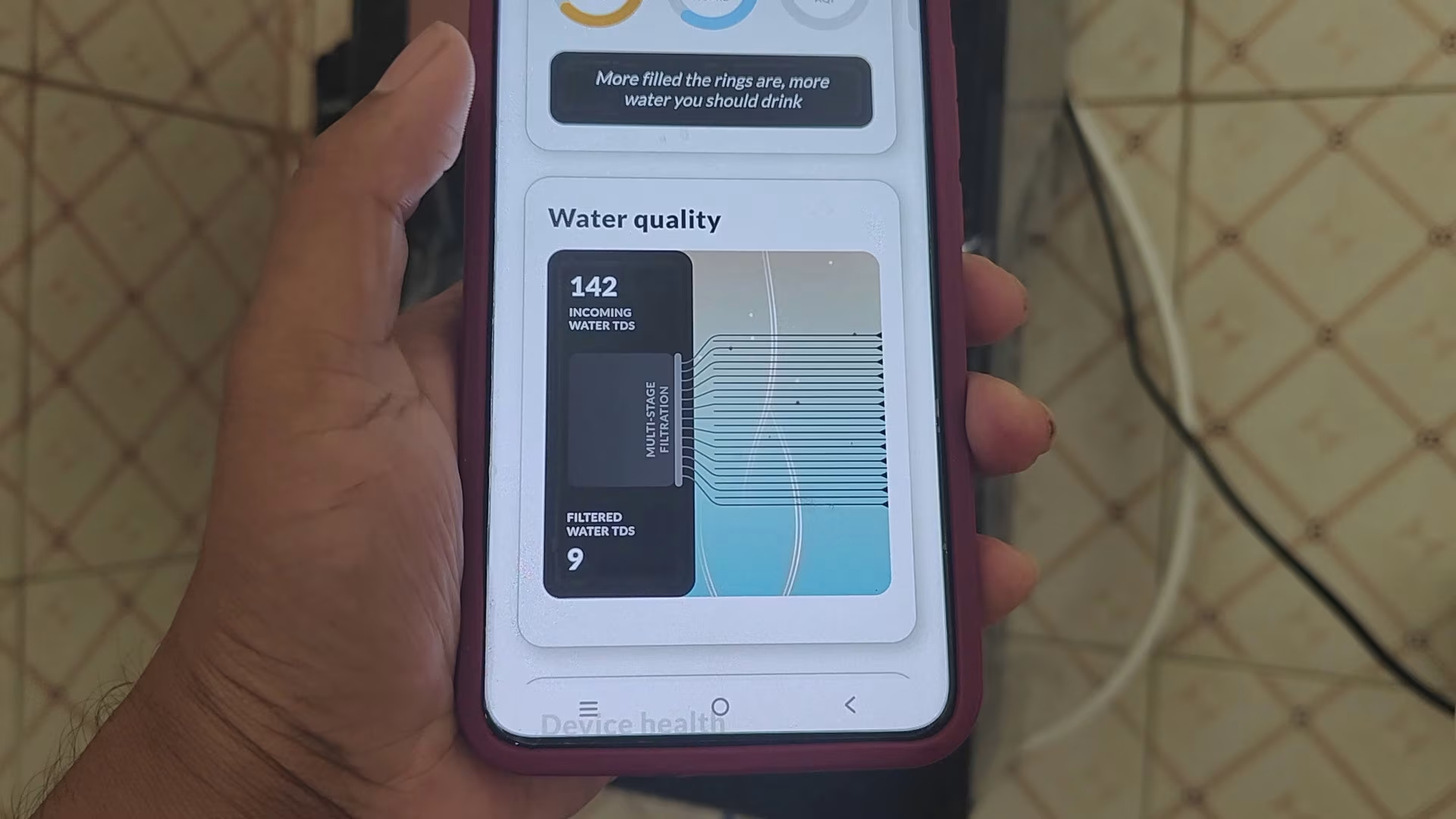
Water quality monitoring: Both the TDS IN and TDS OUT readings you can see on the app and also on the purifier display itself.
Consumption tracking: Daily, weekly and also monthly water usage is shown, which is becoming very useful if you are maintaining some hydration goal.
Filter life monitoring: The remaining life of filter is displayed and it also giving you the replacement prompt on correct time.
Automated service requests: The purifier is detecting the issue by own self and then raising one service booking directly from the app.
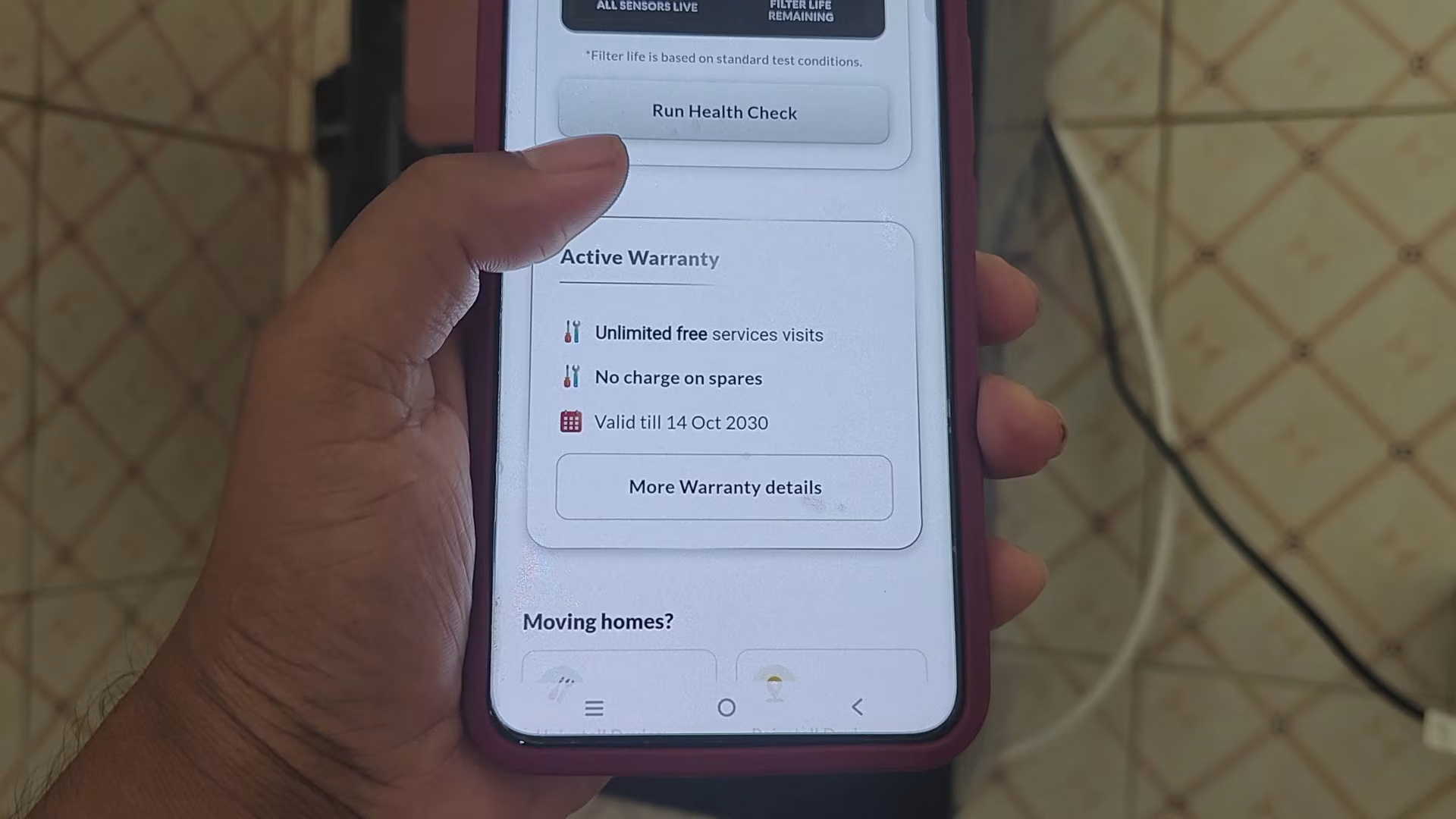
Warranty details: In my app the warranty coverage is clearly showing until 2030, which is confirming the 4-year unconditional warranty without any doubt.
Smart display on the purifier
Even when the app is not there, the front display is still showing the TDS levels, the water consumption, the real-time operating status and also the error alerts.
Warranty, Maintenance and Cost of Ownership
| Cost Item | Amount |
| Purifier price | ₹19,999 |
| Filter replacement (4 years) | ₹5,800 |
| Total 4-year cost | ₹25,799 |
| Effective cost per year | ~₹6,450 |
| Effective cost per month | ~₹537 |
One more thing, inside the box you are also getting the external pre-filter worth ₹1,500, and this is protecting the internal filters, mostly in that case when your water supply is carrying the sediment particles.
With the 4-year unconditional warranty, one 10-year lifetime warranty on the steel tank and also the UV LED which is rated up to 10 years, the long-term ownership cost is becoming very much predictable. If we are comparing with many other competitors who are charging ₹3,000 to ₹5,000 every year as AMC fees, then this one is giving really good value.
Also see, more than 2 years filter life RO Water Purifier – Atomberg Intellon vs. UC Native M1 vs. M2 Water Purifiers
Pros and Cons
Is the Aquaguard Enrich Ritz Pro Worth Buying?
The Aquaguard Enrich Ritz Pro done what it was promising- the RO performance is strong, the mineral-added water is tasting good, the tank is filling fast, and the smart app also is actually useful one. The 4-year unconditional warranty and the transparent filter cost are removing the biggest tension of RO purifier.
But it is not fully perfect also. The users who are wanting to control the output TDS by their own hand, or who want to clean the tank themselves, they may feel little disappointed. Still, for most of the families who are using mixed or hard water, this one is standing as among the best all-round RO+UV+Copper+Alkaline purifiers inside the ₹20,000 range.
Rating: 4.3 / 5
| Category | Score |
| Purification performance | 4.5/5 |
| Build and design | 4.5/5 |
| Smart features | 4.5/5 |
| Maintenance and convenience | 3.8/5 |
| Value for money | 4.3/5 |
Frequently Asked Questions
No, it is not having. It is running fully in automatic way and it uses the dedicated mineral cartridges (copper, zinc, calcium, magnesium) plus one alkaline stage for balancing the water, instead of giving any manual TDS controller.
Not so easily. The tank is airtight type and its lid is also screwed shut, so the cleaning has to be done only by one Aquaguard technician at the time of service visit.
In my testing, the 5-litre tank was getting refilled within under 15 minutes only.
It comes with a 4-year unconditional warranty, and the filters are also included in this. The stainless steel tank is having a lifetime warranty, which Aquaguard is defining as 10 years. In my Eureka Forbes app, the warranty coverage is showing up to 2030.
Aquaguard is listing the filter replacement cost for 4 years as ₹5,800.
No. The purifier is connecting only with the 2.4 GHz Wi-Fi networks.
Yes. The 2-in-1 Alkaline Boost stage is raising the pH of the purified water up to alkaline level, as per the BIS standards.


