When it comes to improving your water purifier TDS controllers and mineralizers are two different technologies to solve water quality issues. Both have their market share TDS controllers focus on mineral balance and mineralizers on mineral enhancement.
Based on my personal experience using both TDS controllers and mineralizers as well as my previous experience as a water treatment expert here are the differences between TDS Controller and Mineralizer water purification technologies.
Quick Comparison table of TDS Controller and Mineralizer in RO Water Purifier
| Parameter | RO TDS Controller | RO Water Purifier Mineralizer |
| Mechanism | It is doing bypass mixing of raw water | It is doing remineralization after the RO purification is fully done |
| Adds new minerals? | No, it is only recycling the minerals which is already present in raw water | Yes, it is adding calcium, magnesium and other minerals newly |
| Water safety | If source water TDS is not safe, then contaminants can come back into purified water | It is not allowing any contaminants to come back |
| Taste improvement | Improvement is moderate and depend on source water quality | Improvement is more consistent and can be control properly |
| Best suited for | Best for source water having very low TDS (below approx. 100–150 ppm) | Good for any RO system, specially useful for borewell or tanker water having high TDS |
| Adjustability | Can be adjust by user through valve or dial | It is fixed dosing only, done through cartridge |
| Maintenance | Very less maintenance, only occasional checking of valve | Cartridge need to be change every 6 to 12 months normally |
| Health perspective | Only TDS is adjusted here, no nutrition value is added | Genuine essential minerals are getting restored here |
What is TDS?
TDS full form is Total Dissolved Solids, means the total amount of organic and inorganic things — like minerals, salts, metals and other compounds — which are dissolved inside the water, and this we measure in ppm.
But here is the thing which most of the people are missing – TDS is only measuring the dissolved solids, not the nutritional quality of water. So if TDS reading is high, it not always means “more minerals are there” — it can also means more dissolved salts, heavy metals or other contaminants are present. This is only reason why TDS Controller and Mineralizer cannot be use as same thing — one is just changing the number, but other one is actually changing what all things are present inside the water.
As per BIS IS 10500 and also WHO drinking water guideline, both are telling about acceptable range of TDS, and mostly they are suggesting that purified water should stay in between 300–500 ppm for best safety and taste. But they are also giving warning that if TDS is too much low (near to zero), then water will taste flat and also for long time drinking it may not have enough beneficial minerals in it.
TDS Controller is Good or Bad?
This is the most common question buyer’s are asking, and honest answer is: it depend on your source water quality only.
When TDS controller is good:
- Your input water is having moderate TDS (like 200–500 ppm) and it need only little boost for improve the taste.
- You are wanting more natural mineral taste without adding separate mineral cartridge for this.
- You want the adjustable system which you can tune it seasonally, as per water quality keep changing time to time.
When it can become problem:
- If your source water already having high TDS or contains contaminants like nitrates, fluoride, or heavy metals, then TDS controller is bypassing the raw water without removing these harmful substance — that means whatever RO membrane was supposed to filter out, some part of it is coming back into your drinking water only.
- It is not adding minerals in selective way, it simply letting back whatever was there in original water, good one or bad one, no difference for it.
So basically, TDS controller is not inherently good or bad type thing — it is more like blending mechanism, not purification or enrichment technology as such.
What is Mineralizer in RO Water Purifier?
A Mineralizer, on other hand, is working through remineralization process, not through bypass mixing like TDS Controller. Normally it is install as a Mineral Cartridge After RO Membrane — this is meaning the last stage before water is going to storage tank — and this cartridge is not touching the raw input water in any way.
Mineral Technology in RO: How It Is Working
- First water is passing fully through RO membrane, then UF, then UV stages, and in this process almost all dissolved solids, bacteria and viruses are getting removed.
- After that, this fully purified water is flowing through the remineralization cartridge, which is containing calcium, magnesium and other trace mineral compounds which are embedded inside a filter media (some brands are calling it Mineral Guard).
- When water is passing through this cartridge, it is picking up a controlled and consistent dose of these minerals — this process is generally known as Mineral Dosing.
- Final result is water which have restored Water Mineral Balance, better taste, and many times slightly higher pH also. Tank material is also mattering a lot for this — you can check more in Stainless Steel Vs ABS Plastic Water Storage Tank.
Because Mineralizer is not doing any bypass of membrane, so it is not bringing back any of the original contaminants — only the minerals which are added purposely and already filtered are going in water. This is the actual difference between bypass mixing (TDS Controller) and true remineralization (Mineralizer): one is just recycling the raw water again, but other one is building the water quality from very beginning.
Types of Mineral Cartridges
- Copper Mineral Cartridge – This cartridge is infusing small amount of copper into the water (as per BIS norms only), and in Ayurvedic tradition it is considered to have antimicrobial and various health benefit.
- Alkaline Mineral Cartridge – This type is increasing the pH level of water, which is generally marketed as “alkaline water”. Many users are believing that it helps to balance the pH of body, although this is more of a general belief than proven fact.
- Remineralization Filter / Inline Mineral Cartridge – These are more general purpose cartridge, mainly working for restoring calcium and magnesium, so that water get better taste after purification.
Technology and Working Mechanism
TDS controllers (also known as Total Dissolved Solids controllers) blend purified RO water with a controlled amount of bypass water to maintain optimal mineral levels.
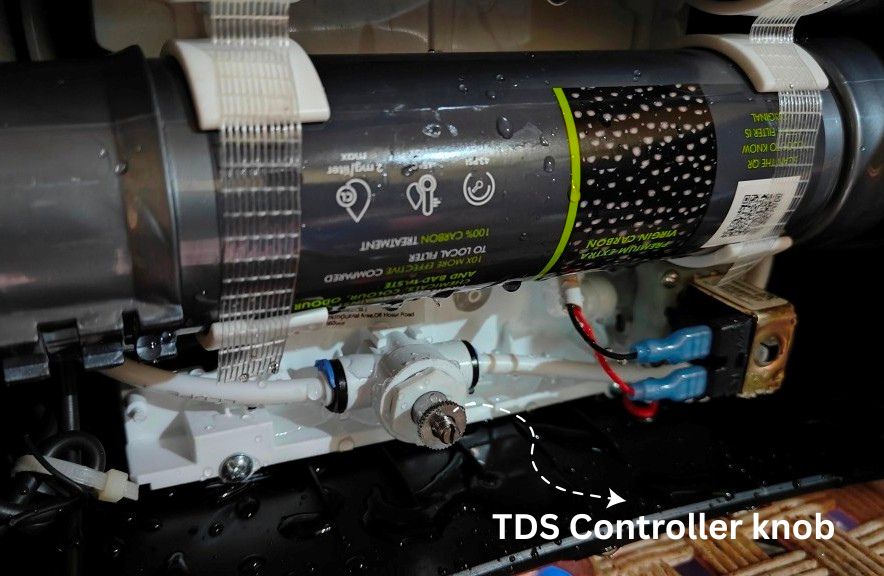
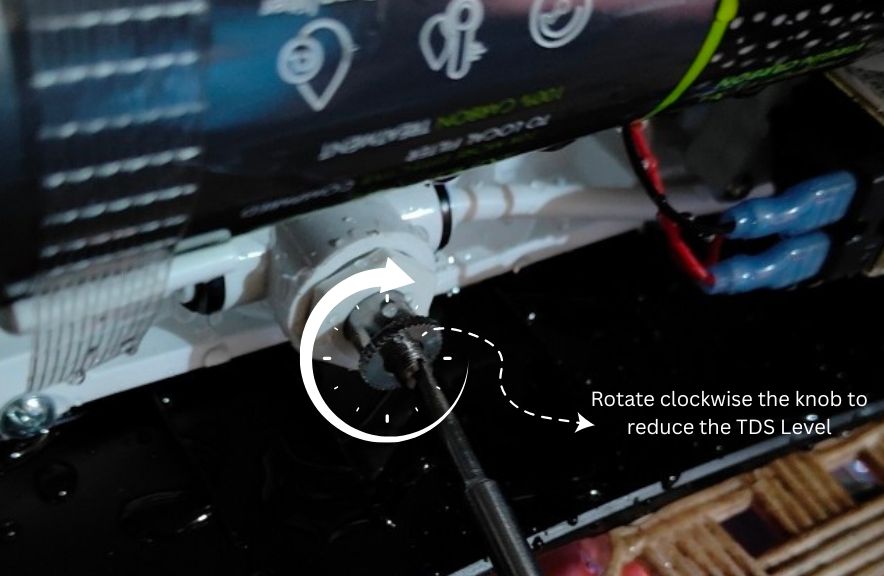
The technology uses a fancy valve system that allows a certain percentage of source water to mix with the fully purified water so calcium, magnesium and potassium are retained.
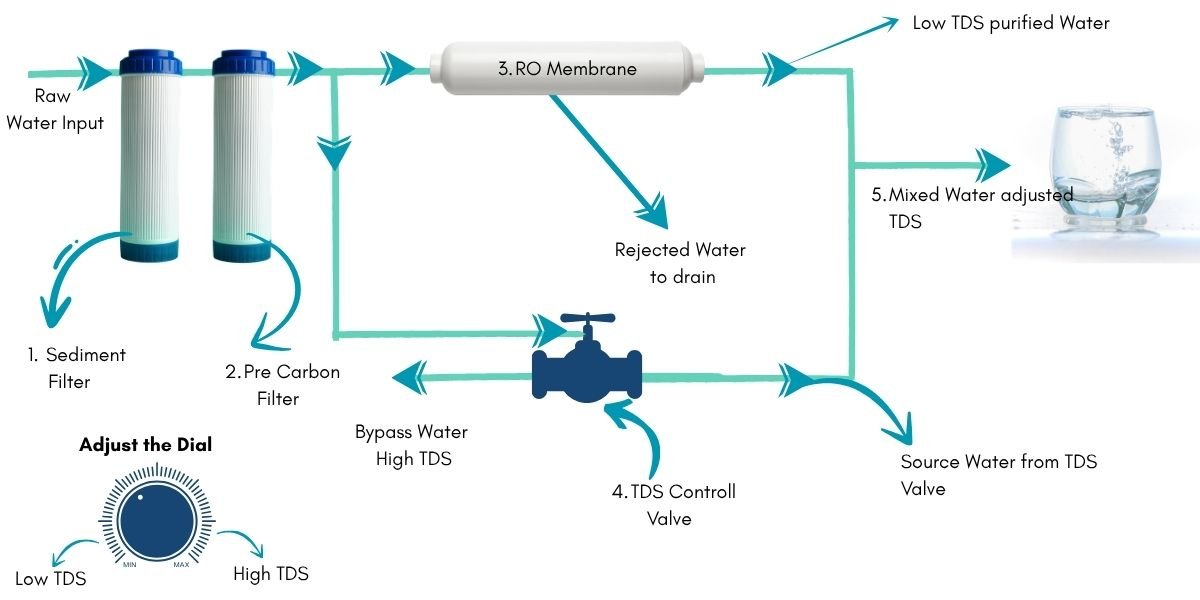
Mineralizers on the other hand use post-purification mineral addition approach using specialized cartridges or chambers filled with mineral stones, alkaline balls or mineral-rich media. These components add minerals to the purified water, often including trace elements that were completely removed during the RO process.
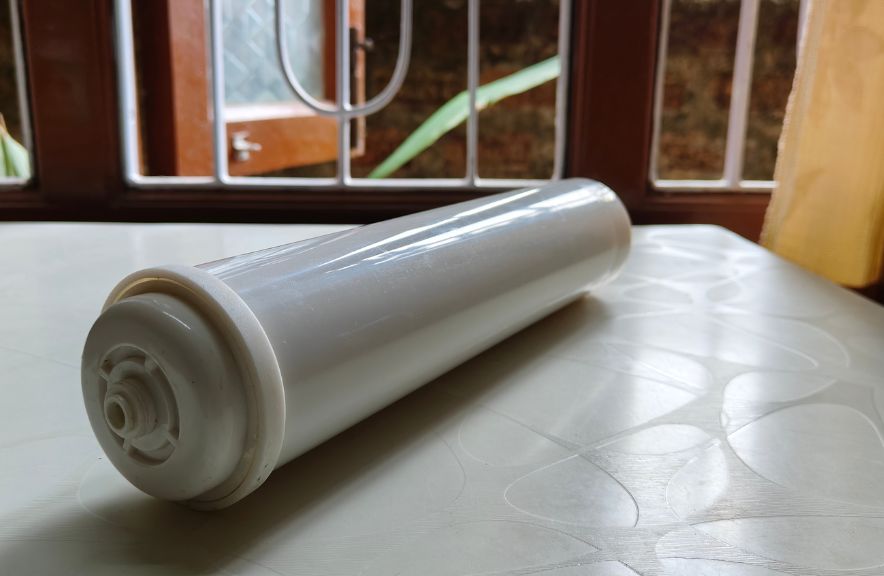
But the main difference is in their approach – TDS controllers preserve existing minerals while mineralizers add new ones. This difference affects the mineral profile and overall water quality.
Winner – Both (depending on source water quality)
Mineral Retention and Enhancement
TDS controllers keep the natural mineral balance of your source water, retaining 10-30% of the original mineral content depending on the controller settings. I find this works well when your source water has a good mineral profile, it just prevents over purification while keeping taste and nutritional value.
By adding a wider range of minerals, such as calcium, magnesium, potassium, sodium, and other trace elements, mineralizers adopt a stronger approach. Depending on the cartridge and water flow rate, the mineral cartridges can add 50–150 ppm TDS.
However, TDS controllers rely on the mineral content of your input water, whereas mineralizers provide more reliable results regardless of the quality of the source water. A TDS controller won’t add anything if your source water is naturally mineral-poor or highly contaminated.
Winner – Mineralizer (by a small margin)
Water Taste and pH Impact
To preserve the minerals’ natural balancing its limit, TDS controllers normally keep the pH between 7.0 and 7.8, which is neutral to slightly alkaline.
As per to my observations, the water treated by TDS controllers usually has a well-known flavor profile that most people find tolerable if the source water was initially good.
Mineralizers can change both pH and taste; the alkaline minerals added during the process usually produce water with a pH of 8.0 to 9.5. Taste is greatly influenced by the mineral cartridge’s composition; some people report a slightly sweet or refreshing taste, while others initially pick up on a subtle metallic undertone.
However, tastes differ, so what works for one family may not work for another. Furthermore, mineralizer-produced alkaline water is commonly advertised as having health benefits despite the lack of scientific proof.
Winner- TDS Controller
Maintenance and Operational Costs
TDS controllers are very low maintenance, just periodic adjustment of the bypass valve and occasional system cleaning. The controllers themselves have no consumable parts and can run for 5-7 years with minimal intervention, very cost effective over their lifetime.
Mineralizers need regular cartridge replacements every 6-12 months depending on water usage and cartridge capacity. These replacement cartridges cost ₹500 – 800 each and some advanced mineralizer systems use multiple cartridges that need replacement at different intervals.
I calculated that over 5 years a mineralizer system can cost ₹2,500 to ₹3,000 more in maintenance than a TDS controller. But that cost difference may be justified if you have extremely soft or mineral deficient source water.
Winner- TDS Controller
Installation Complexity and System Integration
TDS controllers fit into existing RO systems and can often be retrofitted to older purifiers with minimal changes. Installation is just a single bypass line and adjusting the control valve, most techs can do that in 30-45 minutes.
Mineralizers need dedicated space for the cartridge housing and may require additional plumbing changes to fit the mineral cartridge assembly. Installation is more involved, takes 1-2 hours and sometimes requires system changes that may void existing warranties. But newer purifiers have built in mineralizer slots so installation is easy for those. Older systems are a different story and may require a pro.
Which RO Use Which Technology?
If we are seeing current models in market, this split is clearly visible in real product design also:
- Aquaguard Marvel NXT and Aquaguard Select Designo, both are using “Taste Adjuster” together with Active Copper technology — which is basically working like TDS Controller only, combined with copper infusion, for purpose of RO Water Taste Improvement, but without having any separate remineralization cartridge for it.
- KENT Grand RO is having one clear “TDS Control System” where user can adjust the output TDS while also trying to keep natural minerals intact — this is more like hybrid type, but leaning towards TDS Controller philosophy only. For knowing about maintenance cost difference, you can check Kent Vs Aquaguard RO AMC.
- Native M2 Pro and Atomberg Intellon, these two are representing more advance side of Water Purifier Technologies — both of them are avoiding MTDS mixing and RO bypassing completely, and instead doing full RO process first, then adding dedicated mineral/alkaline cartridge after that for true remineralization purpose — this is more close to real Mineralizer design. Atomberg one is even more smart, its adaptive mode is switching between RO and UF+UV depending on live input TDS, so that minerals are not getting over-stripped unnecessarily.
These RO Purifier Components are differing brand to brand, so better to check spec sheet only, don’t just assume same for all. If your priority is low maintenance, you may explore RO With 2 years filter life also.
Conclusion
If in your home the source water is already having very low natural TDS (this is common in some municipal supplies), then TDS Controller can be simple and low-cost way for bringing back the taste again. But for most of Indian households who are depending on borewell, tanker or high-TDS municipal water, a Mineralizer with proper mineral cartridge is more reliable and health-conscious option — because it is improving the Drinking Water Minerals content, without taking gamble on whatever other things which might be coming along with your raw water.
So when you are purchasing your next RO Water Purifier, please don’t only see the marketing words, but check properly which mechanism they are actually using — is it genuine post-RO mineral cartridge, or just a bypass type TDS Control Valve. This one small detail can make big difference, both for taste and also for the long-term Water Quality which is reaching finally into your glass.
Related – Compare SCMT, RO, UV, MF and UF Water Purifiers
Sources